Belgian Witbier: Soft, Spiced 20-Litre Homebrew Recipe
A pale, softly cloudy Belgian witbier at about 4.8% ABV. Pilsner and wheat malt with coriander, orange peel and Saaz hops make a refreshing 20-litre homebrew with classic white-beer character.
Belgian Witbier · 4.8% ABV · 15 IBU · 20 Litres · 7-10 days primary + 2-3 weeks conditioning · beginner
Brewing figures
- Original gravity
- 1.048
- Final gravity
- 1.011
Belgian witbier (wit beer, or white beer) is pale, softly cloudy and gently spiced — coriander seed and orange peel dancing over a light wheat-and-pilsner malt base. At around 4.8% ABV it is refreshing without being thin, with a dryish finish that keeps you coming back for another sip. This 20-litre all-grain recipe (with an extract+steep option) is a brilliant next step after a simple bitter or pale ale, and it rewards careful but not fussy brewing.
Recipe at a Glance
Batch size: 20 litres into the fermenter
Original gravity (OG): 1.048
Final gravity (FG): 1.011
ABV: approx. 4.8%
Bitterness: approx. 15 IBU (Tinseth)
Colour: pale straw, softly hazy
Brewhouse efficiency assumed: 70%
Equipment Needed
Brew kettle of at least 30 litres (or an all-in-one electric system)
Mash tun, or a large grain bag for brew-in-a-bag (BIAB)
Fermenting vessel of 25 litres or more, with airlock
Hydrometer and trial jar
Digital thermometer
Wort chiller or an ice bath
No-rinse sanitiser
Bottling bucket, bottles (about 40 x 500ml) and caps, or a keg
Kitchen scales and a long stirring paddle
A small spice bag for the coriander and orange peel
Ingredients (20 Litres)
Grains (all-grain)
2.5 kg pilsner malt
2.0 kg wheat malt (or flaked wheat if that is what you have)
200 g flaked oats (optional, for a softer mouthfeel)
Extract + steep option
2.0 kg light dry malt extract (or 2.4 kg light liquid malt extract)
1.0 kg wheat dry malt extract (or 1.2 kg wheat liquid malt extract)
200 g flaked oats — steeped in a grain bag at 65–70°C for 30 minutes before the boil
Hops
20 g Saaz (about 3.5% alpha acid) – 60 minute boil
10 g Saaz – 10 minute boil
Spices (last 5 minutes of the boil)
10–12 g crushed coriander seed
10 g dried bitter orange peel (curaçao-style peel preferred)
Yeast and Extras
Wyeast 3944 Belgian Witbier, White Labs WLP400, or a dry Belgian wit / Belgian ale yeast suitable for the style (follow the packet or starter advice for a 20-litre batch)
1 Irish moss (kettle finings) tablet – 10 minutes before the end of the boil (optional; many wit drinkers prefer a soft haze, so you can skip this)
About 100 g dextrose (brewing sugar) for priming, if bottling
Keep the spice additions modest on your first brew. Coriander and orange peel go a long way; you can always add a touch more next time if you want a bolder perfume.
Mashing
Heat the strike water: Heat about 13 litres of water to roughly 73°C so that adding room-temperature grain lands you at mash temperature.
Mash in: Stir the crushed grain (and flaked oats, if using) in slowly, breaking up any dough balls.
Rest: Hold the mash at 66–67°C for 60 minutes. This leaves enough body for a soft, drinkable wit without feeling heavy.
Sparge: Rinse with about 16 litres of water at 76–77°C, collecting roughly 24 litres of wort. BIAB brewers can mash with the full volume (about 27–28 litres at 69–70°C) and lift the bag. Wheat can make the run-off slow — be patient, or add a handful of rice hulls.
Boil
Bring the wort to a rolling boil and add the 20 g of Saaz. Boil for 60 minutes in total.
With 10 minutes to go, add the second 10 g of Saaz and the Irish moss tablet if using.
With 5 minutes to go, add the crushed coriander and dried orange peel in a spice bag (or loose, if you are happy to catch them later).
At flameout, chill the wort to 18–20°C as quickly as you can, then transfer to your sanitised fermenter, leaving hop and spice debris behind. You should have about 20 litres at roughly 1.048.
Fermentation
Aerate the wort well by sloshing the fermenter, then pitch the yeast (liquid yeast: follow the pack or make a starter; dry yeast: rehydrate as directed).
Ferment at 18–22°C. Belgian wit strains often throw a light peppery, citrusy character in this range; hotter ferments can turn solventy, so stay disciplined.
After 7–10 days, check the gravity on two consecutive days. When it is stable around 1.010–1.012, fermentation is finished.
Packaging and Conditioning
Bottling: Dissolve about 100 g of dextrose in a little boiled water, add it to your bottling bucket and rack the beer on top. Aim for roughly 2.4–2.6 volumes of CO2 — a lively but not champagne-like sparkle.
Kegging: Transfer gently and carbonate to a similar level.
Carbonate at room temperature for about two weeks, then cool-condition for at least another week. Witbier is at its best fresh and bright; drink it within a couple of months.
Serving
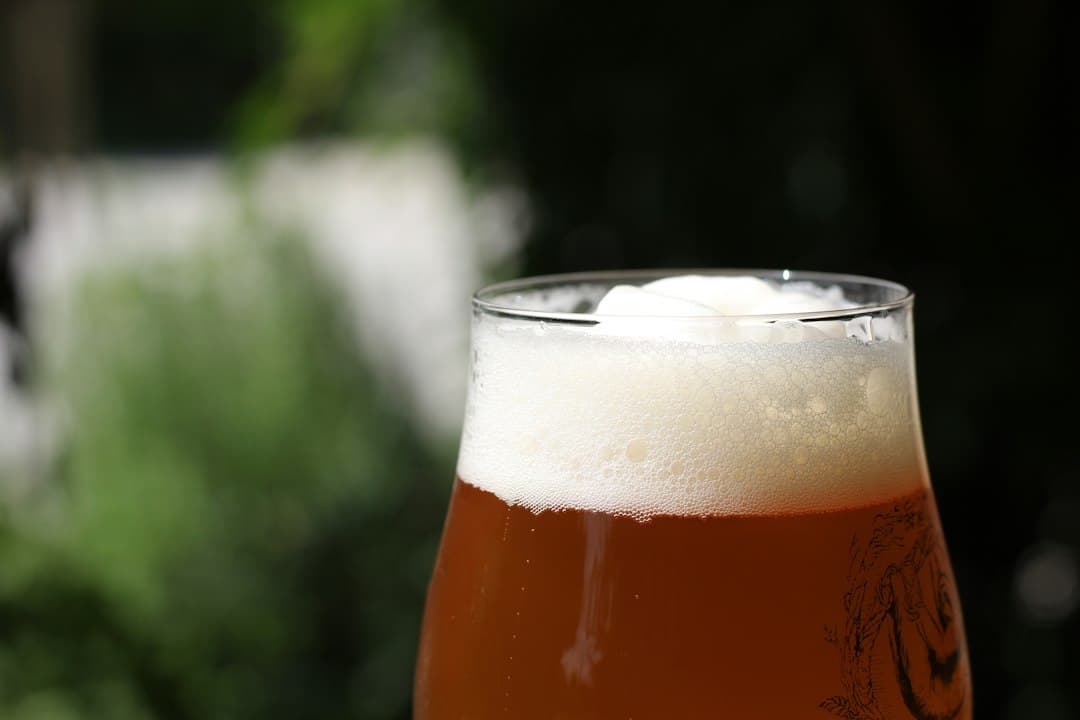
Serve chilled, around 6–8°C, in a tall tumbler or tulip glass. A traditional witbier is softly cloudy: expect lemon zest, light spice, soft wheat bread and a clean, dry finish. A thin slice of orange on the rim is optional theatre — the beer should already carry that citrus note from the peel.
Tips for Success
Do not over-spice. Coriander bitterness and orange pith can dominate if you pile them in.
Keep bitterness low. Witbier is about soft malt, wheat and perfume, not hop bite — stay near 12–18 IBU.
Sanitise everything that touches the wort after the boil.
Embrace a soft haze. Protein from the wheat is part of the style; forcing brilliant clarity can strip character.
Drink it fresh. The citrus-spice aroma fades if bottles sit for months.
Check the numbers
Work out ABV, priming sugar and bitterness for a batch like this one. The gravities from this recipe are filled in as a starting point — always trust your own hydrometer readings on brew day.