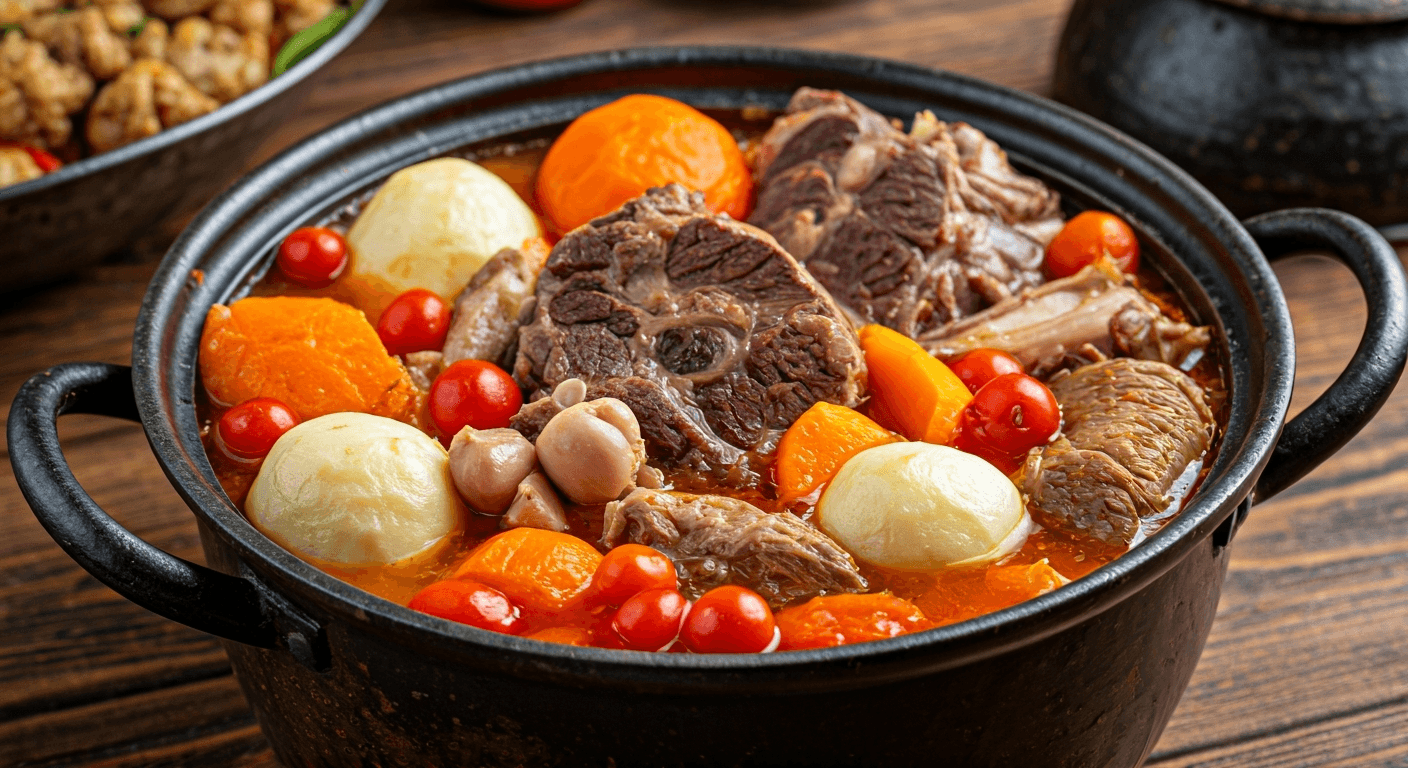
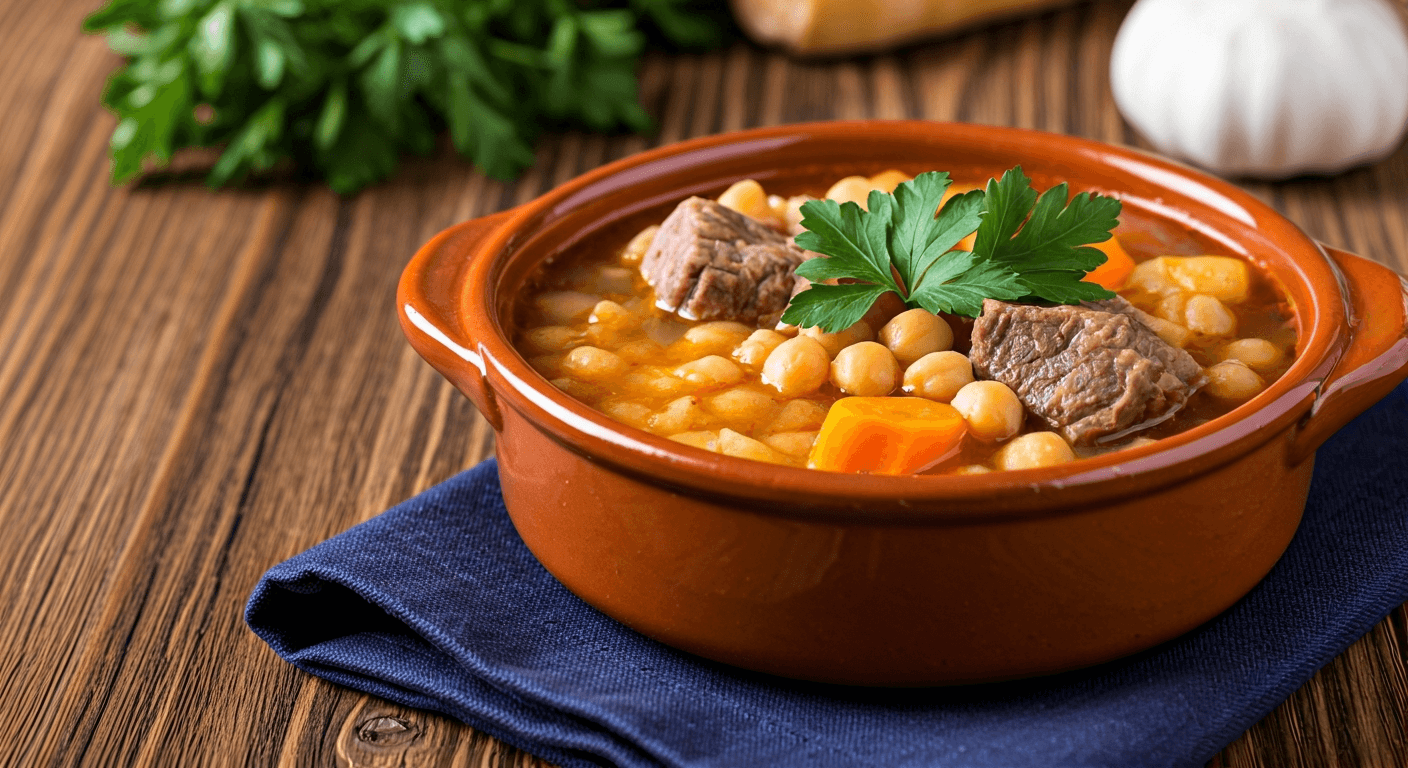
Hearty Spanish Puchero Stew
Warm your soul with this traditional Spanish Puchero, a robust and flavourful stew packed with meats, chickpeas, and vegetables. It's an ideal companion for a range of rich and characterful alcoholic beverages.
main · Serves 4-6
Ingredients
For the Meats:
200g beef shin or chuck, cut into large chunks
2 chicken thighs or drumsticks (bone-in, skin-on)
150g smoked ham hock or streaky bacon, diced
100g Spanish chorizo sausage, thickly sliced
For the Legumes & Vegetables:
200g dried chickpeas, soaked overnight (or 1 x 400g can, rinsed and drained)
2 large potatoes, peeled and quartered
2 carrots, peeled and cut into large chunks
1/2 small white cabbage, quartered
1 large onion, quartered
3 cloves garlic, crushed
For the Broth & Seasoning:
2 tablespoons olive oil
1 teaspoon sweet paprika
2 bay leaves
1 tablespoon tomato paste
2 litres cold water (or chicken/beef stock)
Salt and freshly ground black pepper to taste
A pinch of saffron threads (optional)
Instructions
Prepare the Chickpeas: If using dried chickpeas, drain them from their overnight soak. Place them in a large pot with fresh cold water, bring to a boil, then reduce heat and simmer for 1.5-2 hours until tender. Drain and set aside. (Skip this step if using canned chickpeas).
Sear the Meats: In a large, heavy-bottomed pot or Dutch oven, heat the olive oil over medium-high heat. Add the beef chunks and chicken pieces, searing them on all sides until nicely browned. Remove the beef and chicken and set aside.
Cook the Pork: Add the diced ham hock or bacon to the pot and cook until crispy. Add the sliced chorizo and cook for a few minutes until it releases its oils and aroma. Remove the pork and chorizo, setting them aside with the other meats.
Sauté Aromatics: In the same pot, add the quartered onion and crushed garlic. Sauté for 5-7 minutes until softened and translucent. Stir in the sweet paprika and tomato paste, cooking for another minute until fragrant.
Combine & Simmer: Return all the seared meats (beef, chicken, ham/bacon, chorizo) to the pot. Add the bay leaves, saffron (if using), and the pre-cooked (or canned) chickpeas. Pour in the 2 litres of cold water (or stock). Bring the mixture to a gentle boil, then reduce the heat to low, cover, and simmer for 1.5 hours.
Add Vegetables: After 1.5 hours, add the quartered potatoes, carrots, and cabbage to the pot. Stir gently to submerge the vegetables. Continue to simmer, covered, for another 30-45 minutes, or until the vegetables are tender and the beef is fork-tender.
Season & Rest: Taste the stew and season generously with salt and freshly ground black pepper. Remove the bay leaves. Let the puchero rest off the heat for 10-15 minutes before serving to allow the flavours to meld.
Serving Suggestions
Puchero is a meal in itself. Traditionally, it's often served in two or three courses:
First Course: Ladle out some of the rich broth into bowls, perhaps with a few strands of fine noodles (fideos) cooked directly in the broth for the last 5-7 minutes.
Second Course: Serve the chickpeas and vegetables.
Third Course: Present the various meats, sliced or shredded, with a drizzle of the broth.
Alternatively, serve it all together in large, rustic bowls, ensuring each portion gets a good mix of meat, chickpeas, and vegetables. A crusty bread for dipping is highly recommended.
Pairing Tips
This hearty Spanish stew calls for drinks with character and body to stand up to its rich flavours:
Beers: A robust Dark Lager, a malty Bock, a rich Brown Ale, or even a classic Porter or Stout would complement the savoury meats and deep broth beautifully. Look for beers with notes of caramel, roasted malt, or dark fruit. A Spanish Red Ale could also be a fantastic regional match.
Wines: A medium-bodied Spanish red wine, such as a Rioja Crianza or Reserva (Tempranillo), or a Garnacha (Grenache) from Aragon, would be superb. The fruit, spice, and subtle oak notes will marry well with the stew. A dry Amontillado Sherry could also be an adventurous and authentic pairing.
Spirits: A dry Fino or Amontillado Sherry makes for a great aperitif or even a lighter accompaniment to the broth course. Post-meal, a Spanish Brandy (Brandy de Jerez) would be a fitting digestif.
Dietary notes
Pairs with
What to drink with this
From the drinks list

Aperol Spritz
Cocktail
A vibrant and refreshing Italian classic, the Aperol Spritz is the quintessential drink for sunshine and good times, balancing bitter orange with sparkling wine.

Baby Guinness Shot
Shot
A classic layered shot that cleverly mimics the appearance of a miniature pint of Guinness stout, made with just two simple ingredients.

Negroni
Cocktail
A timeless Italian classic, the Negroni is a perfectly balanced aperitif known for its vibrant red hue and delightful bittersweet flavour profile. It's a simple yet sophisticated cocktail that has captivated palates for over a century.